Review: Crafting Tools Line Art Black and White
As a designer who spends half my life staring at stitch charts and the other half worrying about whether a customer’s washing machine will ruin their new purchase, I approach every new digital asset with a healthy dose of skepticism. We have all been there: you find a beautiful graphic online, download it, send it to the hoop, and end up with a tangled mess that looks nothing like the preview. That is why I took Crafting Tools Line Art Black and White for a spin before recommending it to my network of fellow makers and small business owners.
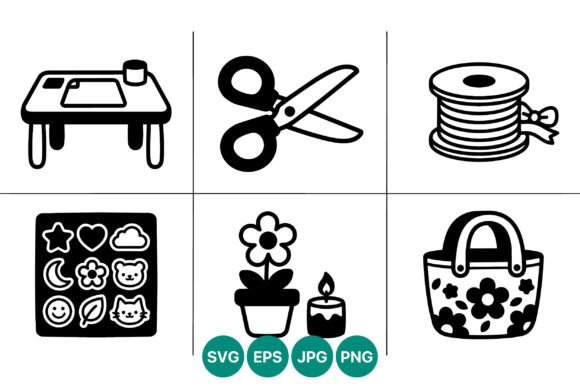
This isn’t just another clip art file; it is a cohesive Illustrations set designed specifically for translation into physical form. The collection features a distinct black and white line art style showcasing iconic crafting elements: scissors, a spool of thread tied with a bow, a workspace table, a flower pot with a candle, a sticker sheet, and a floral tote bag. For those of us in the craft business, this specific combination of imagery suggests a narrative—a story about creativity, comfort, and the tactile joy of making things. But does it hold up under the needle? Let’s break down the practical application of this embroidery project.
The First Impression: Mood and Visual Personality
When you first open the ZIP folder containing these design assets, the immediate takeaway is clarity. In the world of machine embroidery design, complexity is often the enemy of execution. This collection avoids that trap. The line art style is clean, uncluttered, and relies on negative space effectively. This is crucial because it translates beautifully to various stitch types without feeling muddy or overly dense.
The mood is undeniably cozy yet professional. It strikes a balance between whimsical and structured. The inclusion of both functional tools (scissors, thread) and aesthetic items (candle, flowers) allows for versatile storytelling. You aren’t just embroidering a pair of scissors; you are embroidering the *idea* of crafting. This emotional connection is what drives sales for Etsy sellers and boutique brands. Customers don’t just buy a product; they buy into the lifestyle associated with it. This design speaks directly to the maker community, making it an excellent choice for personalized gift items or branded merchandise.
Real-World Application: From Screen to Stitch
I envision this Graphics package shining brightest when applied to soft goods that benefit from a handcrafted touch. Let’s look at a few scenarios where this embroidery file would truly add value.
The Custom Tote Bag: One of the most popular items for small shop products is the canvas tote. Using the "floral tote bag" icon or the "workspace table" element as a central motif creates a meta-commentary on shopping and creating. When stitched onto a sturdy cotton canvas, the black line art pops against the natural fabric color. It feels intentional and chic. This is perfect for commercial embroidery projects aimed at creative professionals who want to carry their tools in style.
Baby and Nursery Decor: The softer elements, like the flower pot with a candle or the gentle curve of the thread spool, translate wonderfully to baby clothes and nursery wall hangings. Because the lines are simple, the design remains legible even when scaled down slightly. A small embroidered patch of the scissors on a onesie or a blanket adds a sweet, personalized touch that parents love. It elevates a basic item into a keepsake.
Holiday and Seasonal Gifts: During peak gifting seasons, versatility is key. This design works year-round. The candle and flowers suggest spring or summer, while the warm tones implied by the line art can be adapted with thread colors to feel cozy in winter. It fits seamlessly into holiday embroidery collections, offering a non-traditional alternative to standard seasonal motifs.
Technical Considerations and Stitch Performance
While the visual appeal is high, any experienced embroiderer knows that aesthetics mean nothing if the stitch quality suffers. Here is how Crafting Tools Line Art Black and White behaves in real-life stitching situations.
Stitch Density and Clarity: The line art format naturally lends itself to satin stitch outlines and running stitch details. However, designers must be mindful of stitch density. If the lines are too thin, they may pucker the fabric or become invisible. Conversely, if filled with heavy fill stitch, the delicate nature of the line art might be lost. I recommend testing the designs with a moderate density to maintain the crispness of the original illustration.
Fabric Texture Compatibility: This design performs best on smooth, stable fabrics like cotton twill, denim, or canvas. The clean lines require a consistent surface to read clearly. On highly textured fabrics, such as boucle wool or rough linen, the fine details of the scissors or the threads on the spool may get lost in the weave. Similarly, avoid using this on stretchy knits unless you use a strong stabilizer to prevent distortion.
Color Contrast: Since the source material is black and white, the success of the final finished product depends heavily on your thread colors. On light fabrics, black or dark grey thread will provide maximum contrast and readability. On dark fabrics, you will need to use white or metallic threads for the outline, potentially filling with lighter shades to ensure the design stands out. Always test on scrap fabric first to confirm visibility.
Where to Exercise Caution
No design is universal, and there are specific contexts where this embroidery project might struggle. Be cautious when applying this to very small hoop sizes. While the icons are simple, some elements, like the individual petals on the flower or the layers of the sticker sheet, contain detail that can become indistinct if scaled down too far. If you are aiming for a tiny pocket square or a miniature accessory, consider simplifying the design or choosing one of the bolder icons, like the scissors.
Additionally, curved surfaces like baseball caps or fitted sweatshirts require careful digitizing to ensure the flat nature of the line art doesn’t look distorted. The design assumes a relatively flat plane. When working with custom apparel that has significant curvature, pay close attention to the hooping technique and consider using a flexible stabilizer to accommodate the shape.
Final Verdict for Designers and Sellers
Crafting Tools Line Art Black and White is a thoughtful, well-executed addition to any designer’s library. It is not just a collection of random icons; it is a curated set that understands the aesthetic preferences of its target audience. For digital product sellers and apparel decorators, it offers a reliable foundation for creating high-value items.
The key to success lies in preparation. Before committing to a large production run, always review the stitch density, inspect small details on your screen, and test the design on your actual fabric. Confirm licensing terms if you plan to sell finished items, and ensure that the final printable mockup accurately represents the potential of the stitch work.
Ultimately, this design bridges the gap between digital simplicity and handmade charm. It respects the medium of embroidery while delivering a modern, clean look that resonates with today’s craft-conscious consumer. Whether you are creating a single personalized gift for a friend or building a brand identity for your craft business, this line art set provides the visual confidence needed to create something truly special.