Hand Drawn Planner Elements Set Review
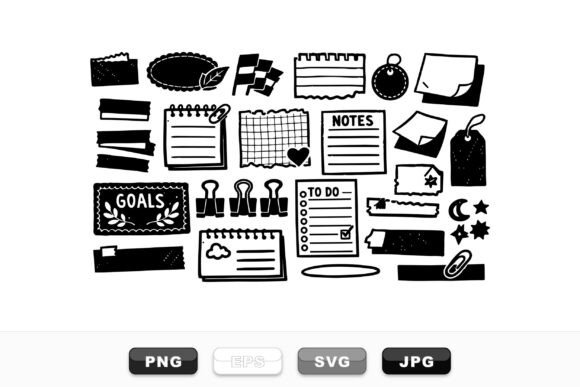
As a designer who spends half my life staring at stitch charts and the other half trying to convince clients that "handmade" doesn't mean "messy," I approach every new digital embroidery file with a healthy dose of skepticism. The market is saturated, and not every cute doodle translates well to thread. Recently, I had the chance to evaluate the Hand Drawn Planner Elements Set, a collection described as a playful doodle sticker sheet featuring torn notes, clips, labels, and a to-do checklist. At first glance, it falls squarely into the Illustrations and Graphics categories, but the real question for any serious crafter or Etsy seller is whether this design holds up when pushed through an embroidery machine.
The First Impression: Mood and Visual Personality
When you open the package containing SVG, EPS, JPG, and PNG files, the immediate takeaway is the relaxed, organic vibe. Unlike rigid, geometric vector art that can look sterile once stitched, these elements have a distinct hand-drawn quality. The "torn" edges of the notes and the slightly uneven lines of the clips give the design a tactile feel. It mimics the texture of paper and adhesive tape, which is a clever visual trick.
For a small business owner looking to add personality to their brand, this set offers a perfect balance. It isn’t overly childish, nor is it too corporate. It sits comfortably in that sweet spot of "organized chaos" that many modern consumers find appealing. The layout feels like a scrapbook page come to life. This aesthetic naturally lends itself to products that emphasize lifestyle, organization, and personal care. It’s the kind of design that says, "I’m busy, but I’m keeping it together," which resonates deeply with our target audience.
Real-World Application: From Screen to Stitch
Let’s talk about where this design actually shines. I imagine this machine embroidery design performing exceptionally well on soft goods that benefit from a touch of whimsy. Consider a custom embroidered tote bag for a teacher or an office worker. The "to-do checklist" element could be stitched in the corner, while the "torn note" serves as a background texture. It transforms a basic canvas bag into a personalized accessory that tells a story.
Similarly, for apparel decorators working on sweatshirts or hoodies, this set provides enough detail to catch the eye without overwhelming the garment. A small cluster of clips and labels placed near a pocket or on the cuff adds a subtle layer of interest. It works beautifully as part of a larger composition, perhaps paired with a simple monogram or a date stamp. For holiday gifts, especially around back-to-school seasons or New Year’s resolutions, the thematic relevance is undeniable. A baby blanket embroidered with these elements could make a unique gift for a new parent who loves planning, or even a nursery decor piece that hints at future growth and organization.
I also see potential in kitchen textiles. A tea towel or apron featuring these planner motifs fits the current trend of "home management" aesthetics. It’s functional yet decorative, bridging the gap between utility and style. For craft fair products, items like embroidered patches or pin-back buttons using these individual elements (like a single clip or label) are highly collectible and easy to produce in bulk.
Technical Challenges and Where to Exercise Caution
However, no design is without its pitfalls, and the Hand Drawn Planner Elements Set requires careful consideration during digitizing or setup. The primary concern lies in the level of detail inherent in "hand-drawn" styles. While the jagged edges look charming on screen, they can become muddy if the stitch density is too high or if the fabric choice is incorrect.
If you plan to use this on textured fabrics like heavy denim or bouclé wool, the fine details of the torn paper edges may get lost. The fabric’s texture will compete with the design’s texture, resulting in a blurry appearance. Similarly, on stretchy fabrics such as jersey knits, maintaining the integrity of those delicate lines requires a strong cut-away stabilizer and possibly a tear-away top stabilizer to prevent puckering. Without proper stabilization, the "torn" look might just look like a distorted blob.
Another area to watch is scale. These elements are designed to be small, sticker-like components. Attempting to enlarge them significantly for large hoop projects can expose the limitations of the line work. Conversely, shrinking them down for tiny applications, like embroidered patches on caps or hats, risks losing definition entirely. On curved surfaces like baseball caps, the flat nature of a "sticker" design might not follow the contour of the fabric well, leading to gaps or tension issues. Always test the hoop size compatibility before committing to a full production run.
Impact on Product Value and Brand Perception
Using a design like this affects more than just the physical product; it influences customer trust and perceived value. In the world of commercial embroidery, professionalism is key. A well-executed version of the Hand Drawn Planner Elements Set signals attention to detail. It shows that the maker understands how to blend digital assets with traditional craft techniques. When customers see clean stitches, consistent thread colors, and clear imagery, they are more likely to view the item as a premium handmade product.
Furthermore, the playful nature of the design encourages engagement. It invites comments and shares on social media platforms, which is crucial for digital product sellers and creative entrepreneurs. A photo of a finished tote bag with this design looks authentic and relatable, unlike stock-photo-perfect items. It enhances the "maker" narrative that buyers love. However, if the stitching is sloppy, the charm turns into clutter. The difference between a desirable boutique item and a discount store trinket often comes down to execution quality.
Practical Designer Notes for Implementation
Before you rush to print your printable mockup or start stitching, here are some essential steps to ensure success:
- Test on Scrap Fabric: Never assume a design will work perfectly on your final material. Use scraps of the actual fabric you intend to sell to check for puckering, bird nesting, or detail loss.
- Check Thread Contrast: The "torn" edges rely on contrast to read clearly. Ensure your thread colors stand out against the fabric. Light threads on light fabric or dark threads on dark fabric will obscure the intricate details.
- Review Stitch Density: High-density fill stitches can crush the delicate lines of the doodles. Opt for lighter densities or use satin stitches for outlines to preserve the hand-drawn aesthetic.
- Inspect Small Details: Zoom in on the SVG or EPS files. Are there any overlapping lines that might cause confusion in the stitch path? Sometimes, manual editing is required to separate elements for better clarity.
- Black and White Mockups: Convert your design to black and white to check the overall shape and balance. If it looks good in grayscale, it will likely hold up in color.
- Confirm Licensing: As with any design asset, verify the license terms. Even if the ZIP includes commercial-use files, always double-check restrictions on reselling the digital file itself versus selling the physical finished product.
In conclusion, the Hand Drawn Planner Elements Set is a versatile and charming addition to any embroidery project library. It bridges the gap between digital illustration and tangible craft, offering endless possibilities for personalized gifts and custom apparel. By paying attention to technical details like fabric choice and stitch density, designers and sellers can leverage this set to create high-quality, marketable products that resonate with today’s consumers. Just remember: the magic is in the execution, so take the time to test, refine, and perfect your finished product.